A story five thousand years long, told in one scroll

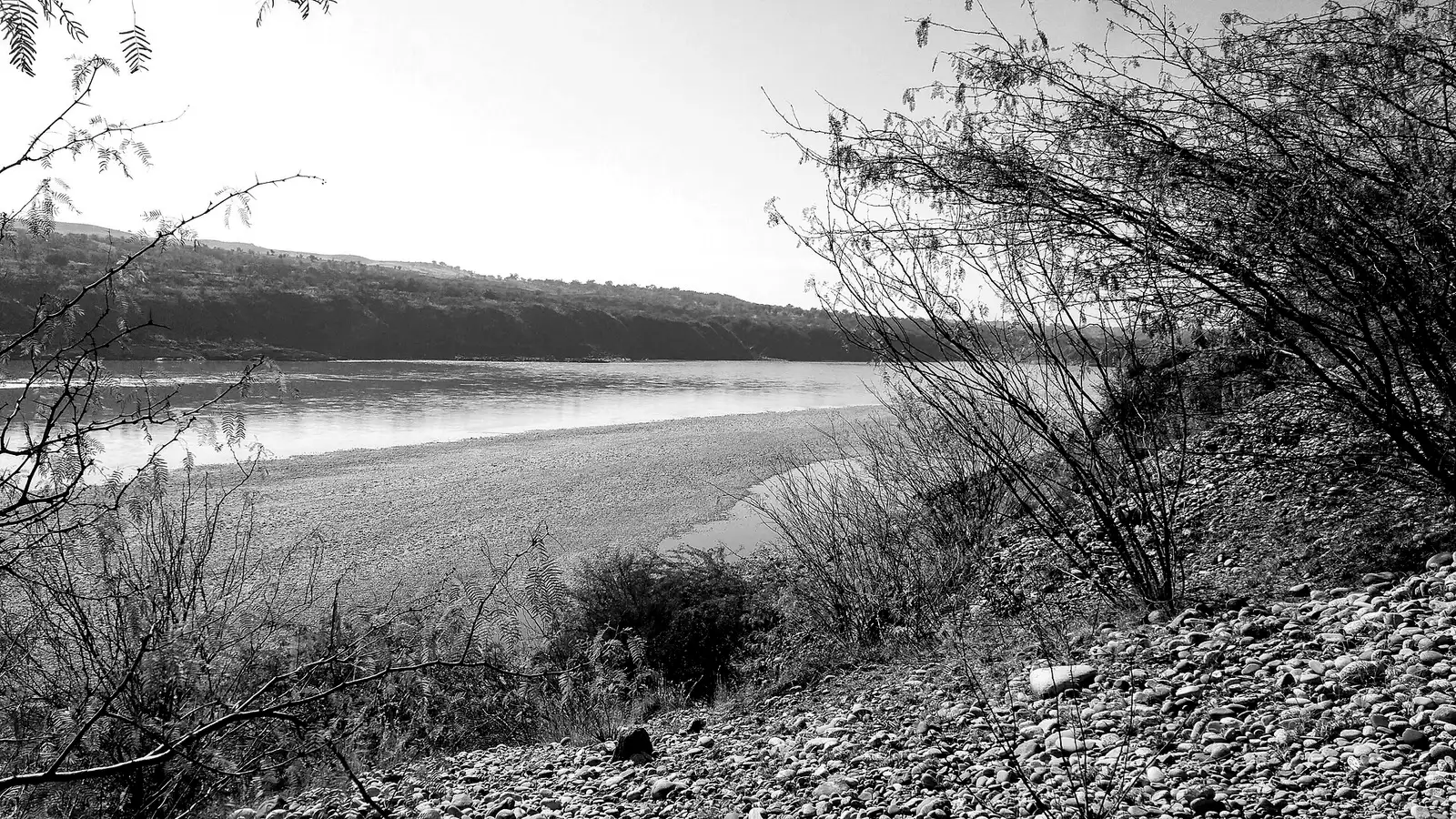
Before India had its name, the river had it first.

This is the story of Sindh, and of everything it refused to lose.

Scroll

Act I · The River

Sindhu became Hindu, became Indos, became India

सिन्धुSindhu

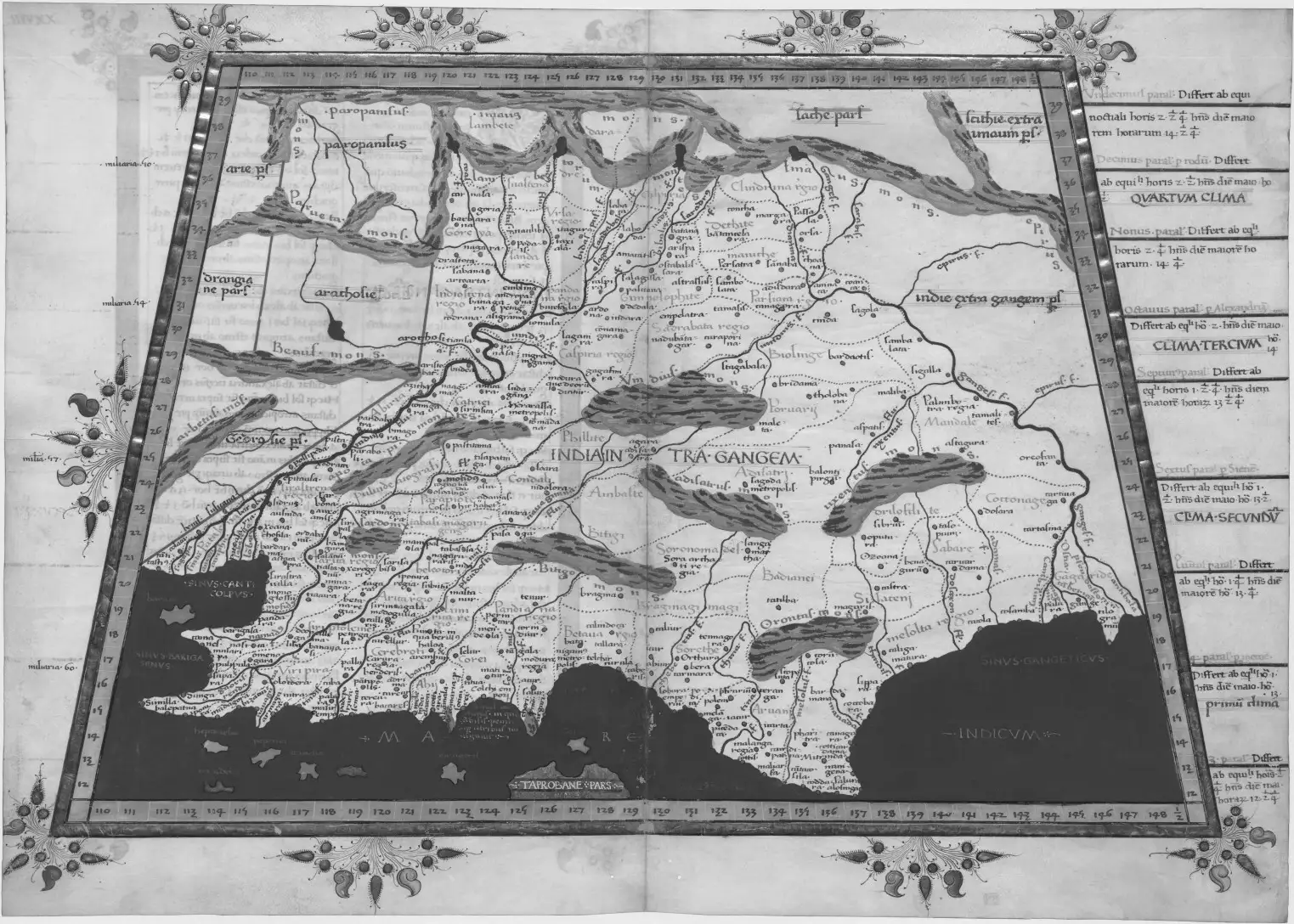
In Sanskrit, sindhu means river. One river so vast it needed no other name. Persian softened its first breath to Hindu. Greek let the breath fall away: Indos. Rome wrote it down as India.

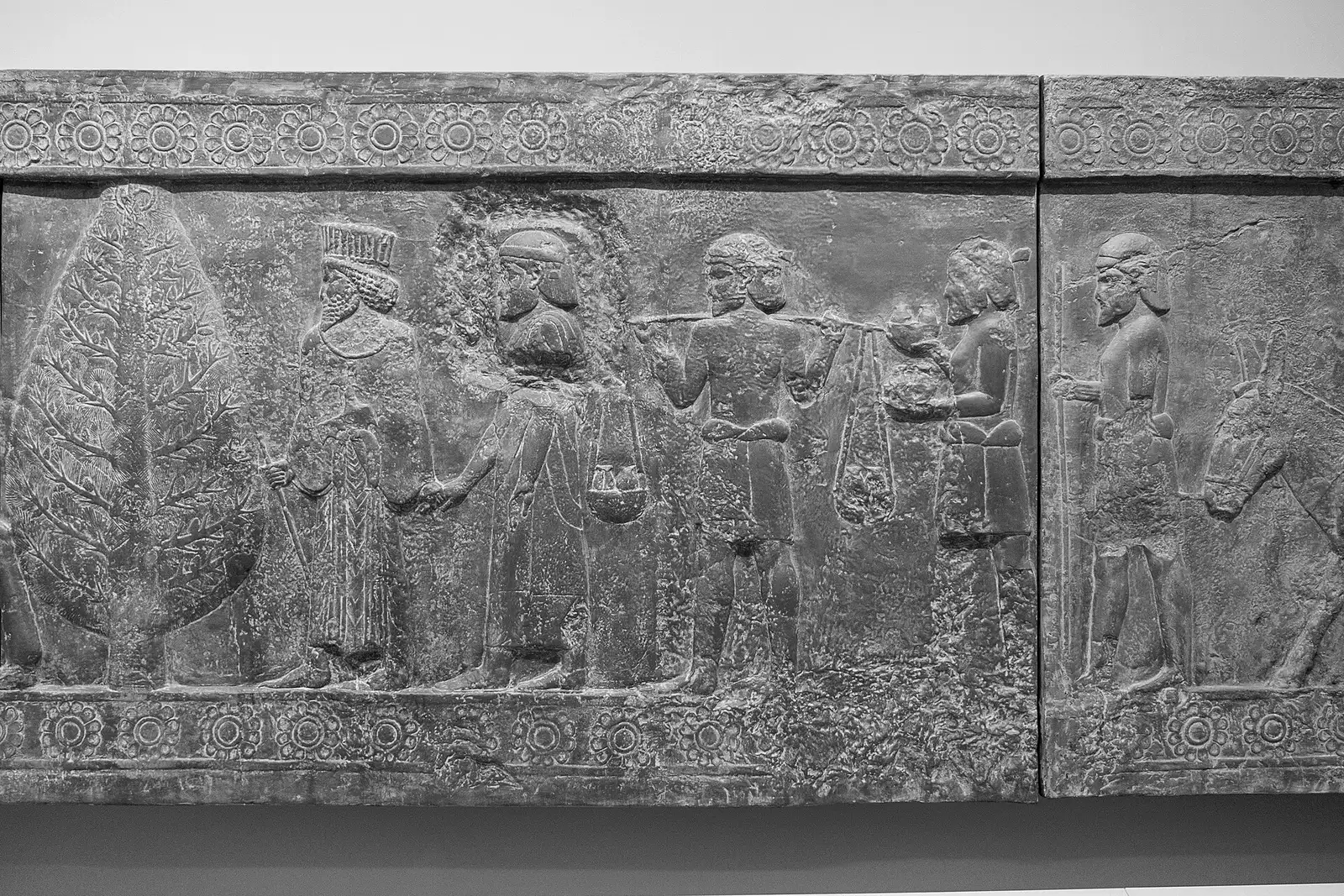
Twenty-five centuries ago the tomb of Darius the Great carried the name Hindush. Sindh, counted a province of the greatest empire of its age.

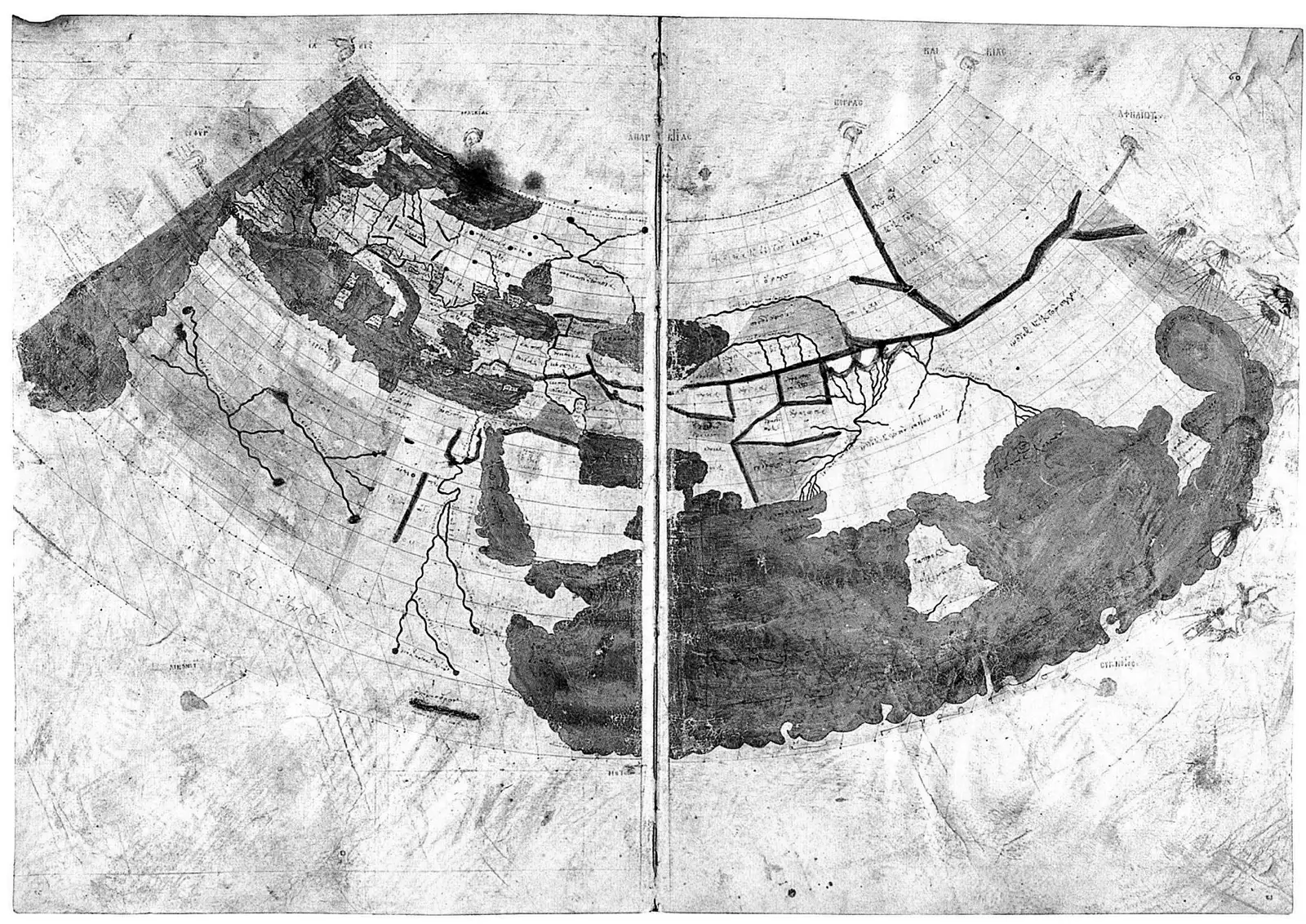
Follow the name of an entire subcontinent upstream, and you arrive in one place: Sindh.

Act II · The Great City

Seventeen centuries before Rome, Sindh had already built a city.

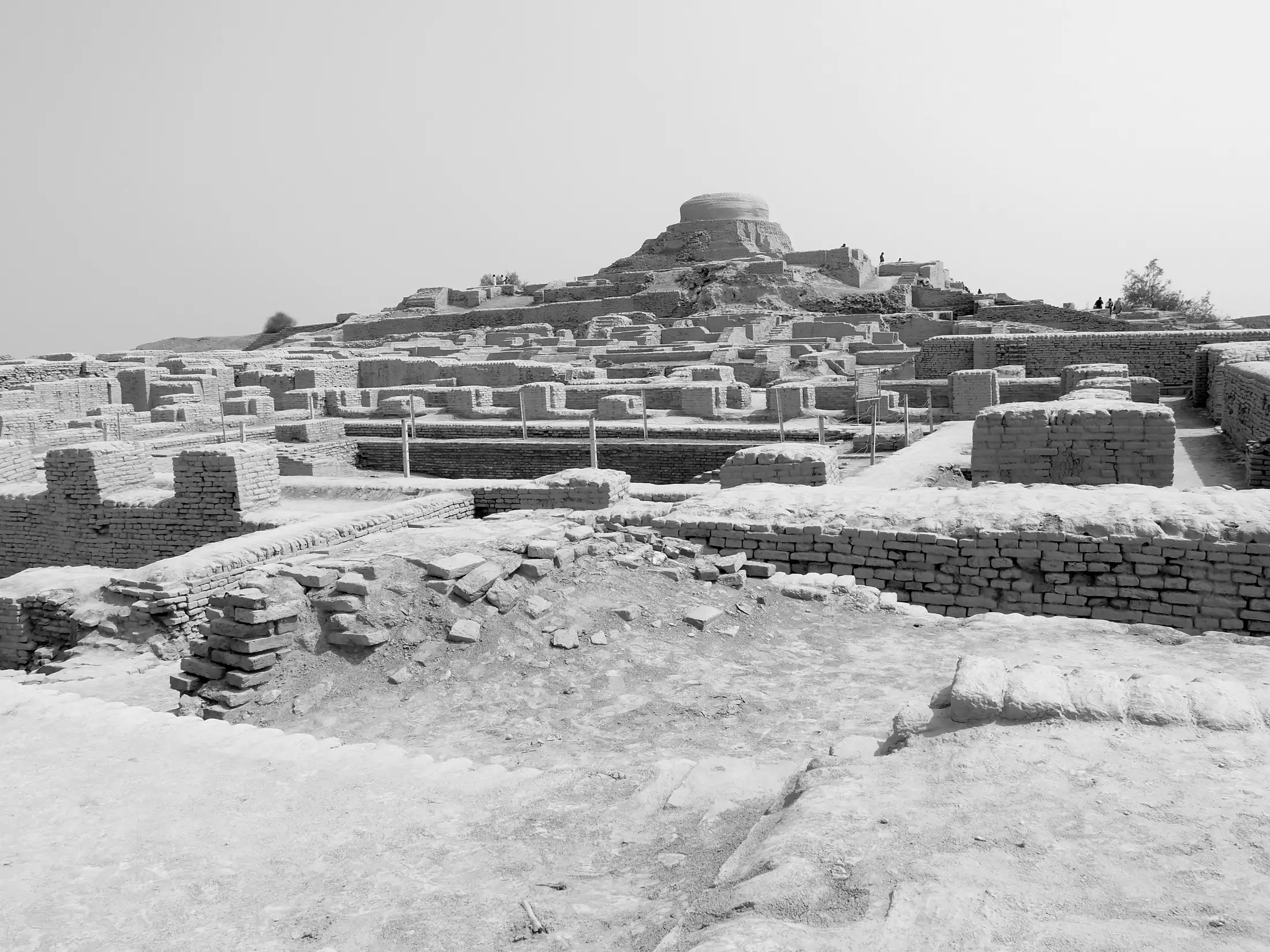
Mohenjo-daro sat on the Indus around 2500 BCE. Nobody knows what its builders called it. The Sindhi name we use, “the Mound of the Dead”, came later, from people who only ever saw a ruin.

A city on a grid

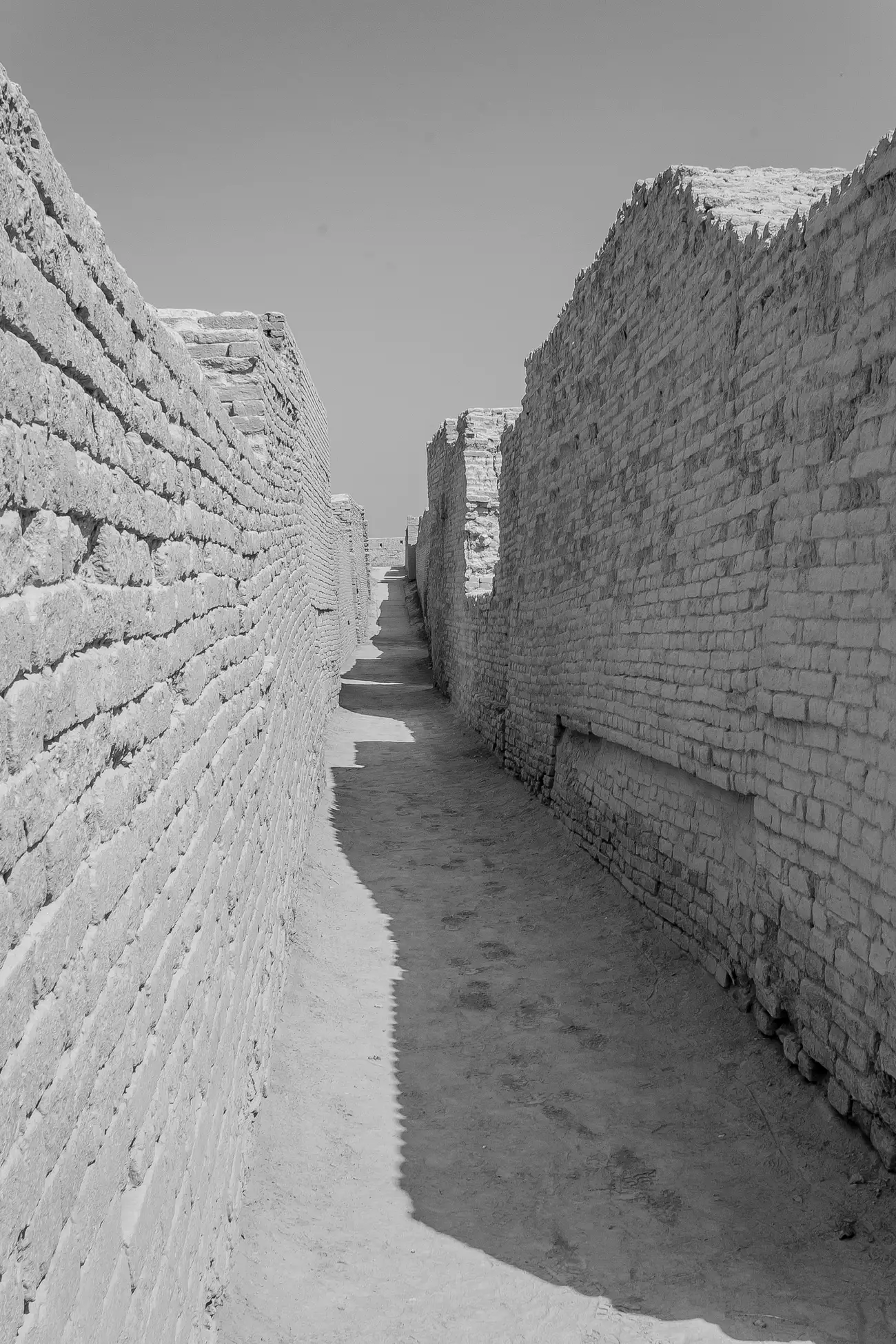
Walk it and you notice the streets are straight. The big ones run roughly north-south and east-west, the lanes come off them at right angles, and you can tell somebody drew all this before anybody built it. The bricks are all one size too.

A narrow residential lane running between standing fired-brick walls at Mohenjo-daro
Fired brick, every one twice as wide as it is thick and twice as long as it is wide.

It had the most advanced living systems

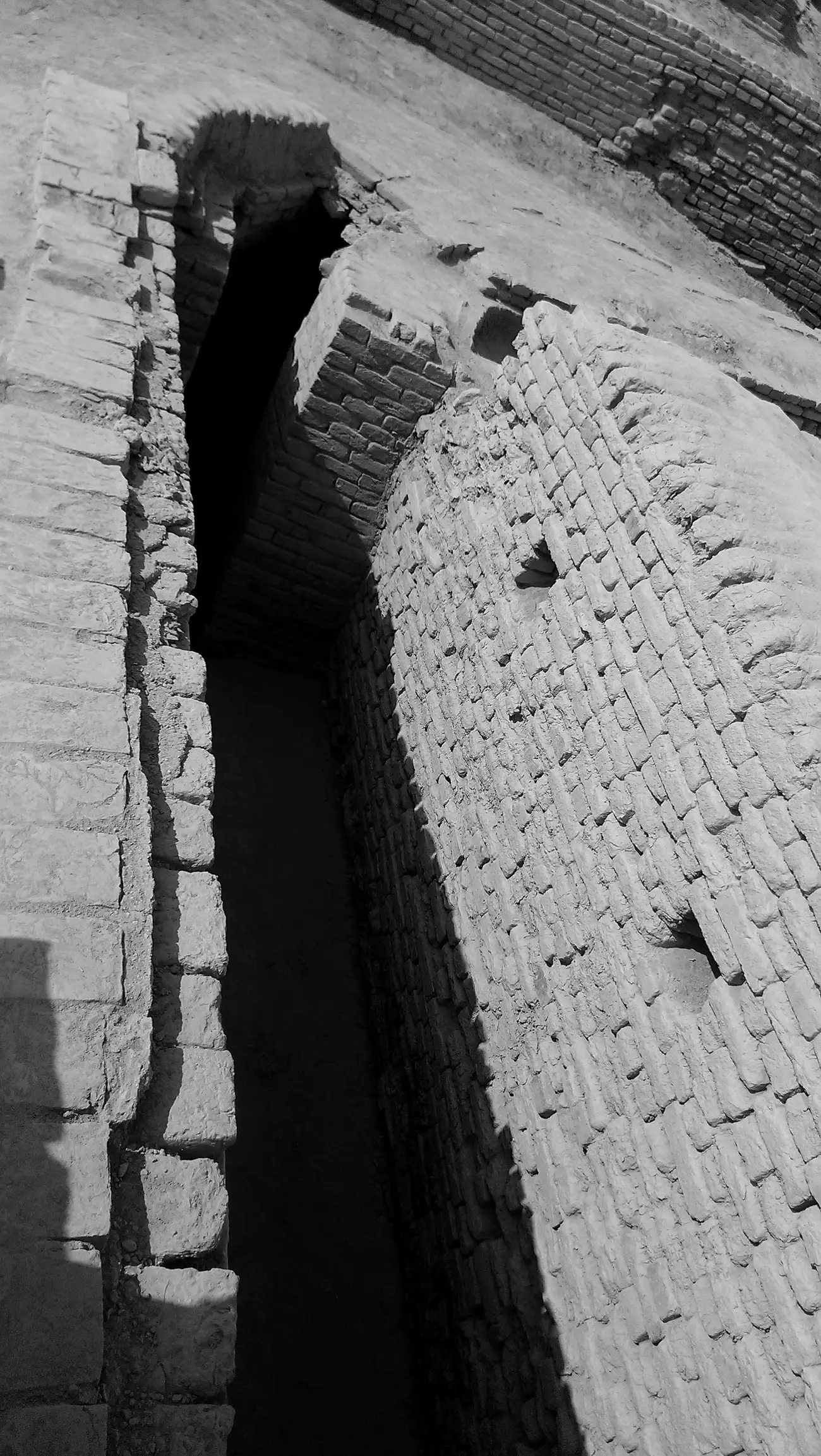
Covered brick drains run under those lanes, carrying dirty water out of the city. They start at ordinary houses, not palaces. Many had a bathing floor of their own, and a well close by. Hardly anywhere else we know of was doing this yet.

An engineered brick water channel among the ruins of Mohenjo-daro
One of the brick channels that ran under the lanes at Mohenjo-daro.

The Great Bath

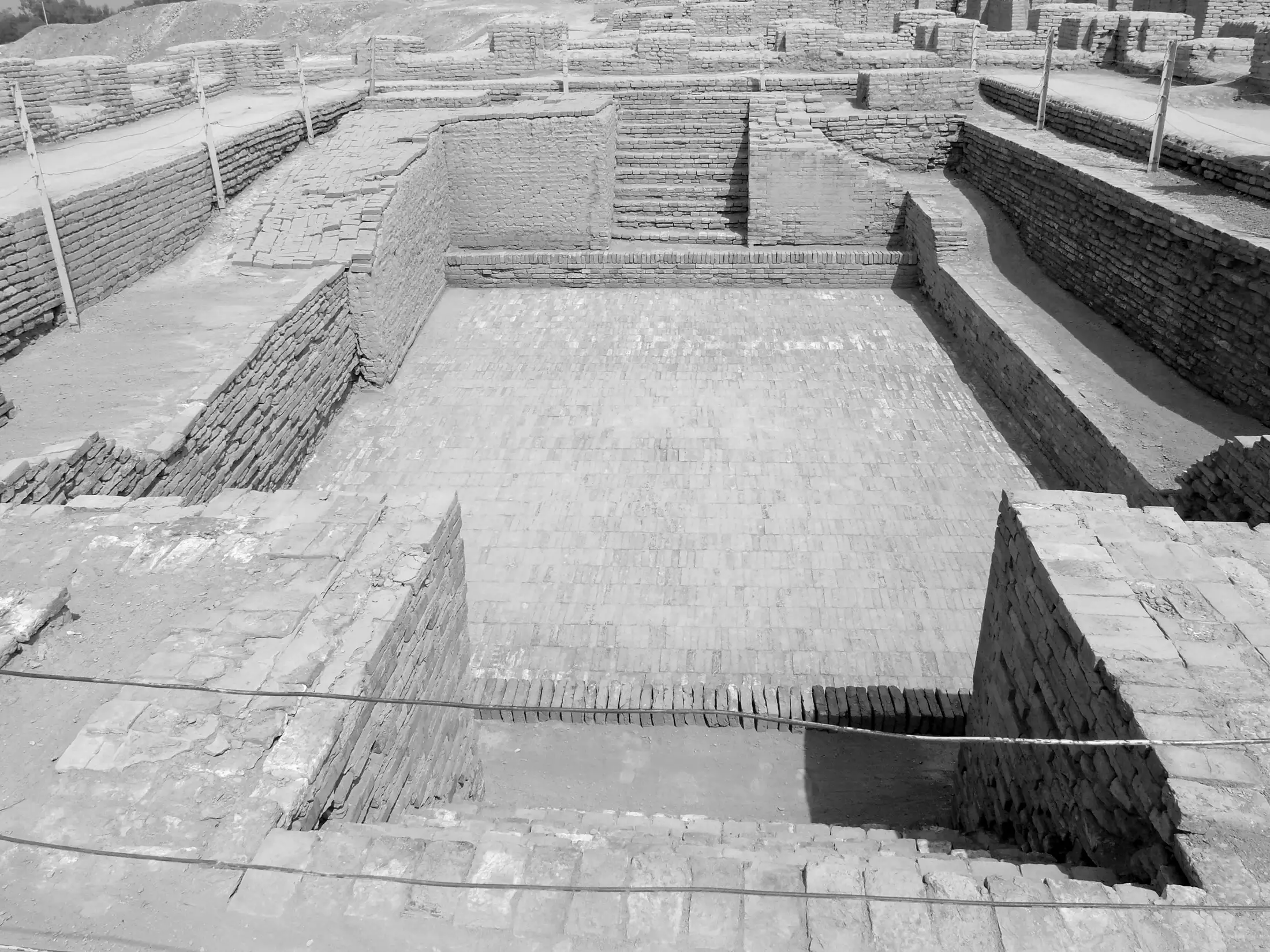
They built it on the high mound: a brick tank about as long as a swimming pool, lined with bitumen to keep the water in. Four and a half thousand years later, it still holds its shape. What it was for, nobody can say for certain.

The Great Bath · roughly 12 × 7 metres · c. 2500 BCE

It wasn’t a village that got lucky. Look at the numbers.

40,000people at its height, as best we can estimate
700+brick-lined wells beneath the streets
4,500years old, and the lines still hold

It traded with the world

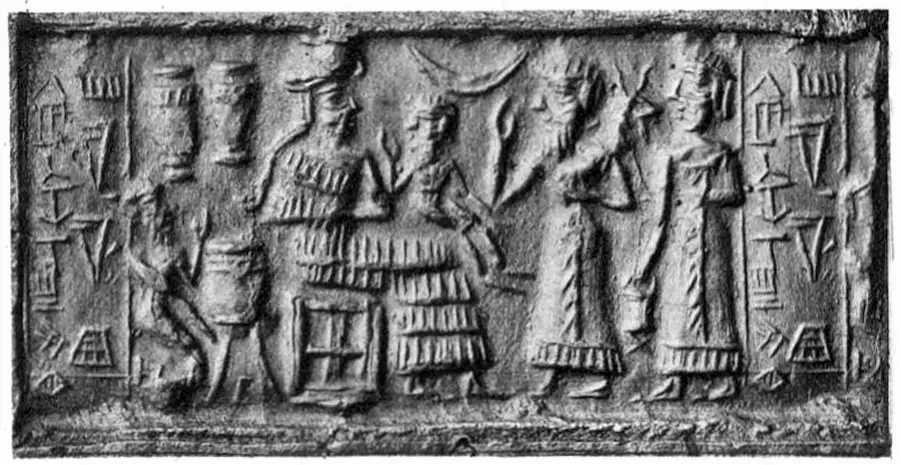
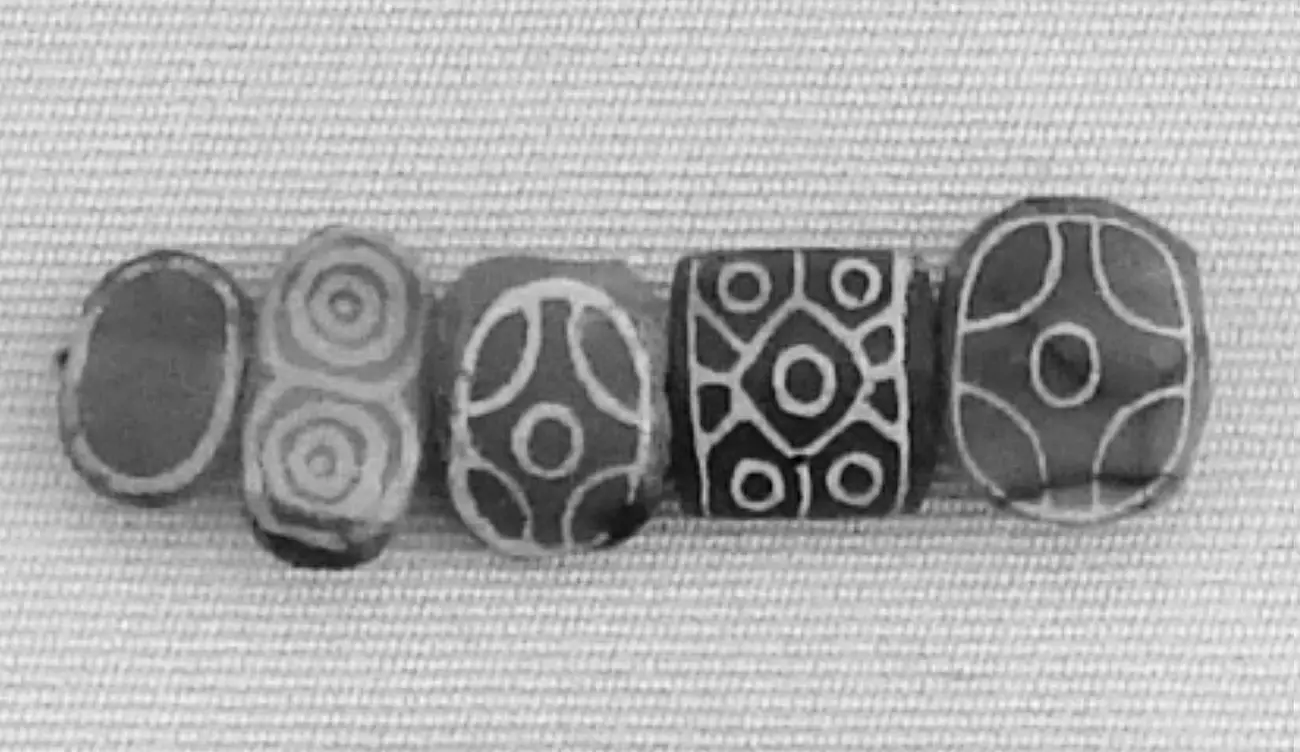
They were fussy about measurement. The weights are little stone cubes, each one exactly double the one below it, so a sack weighed the same in two towns. Etched carnelian beads like these turn up in Mesopotamian graves, a thousand miles west; the people there called that land Meluhha, the name most scholars now read as the Indus. On a seal from about four thousand years ago, a man is listed by his job: Shu-ilishuAkkadian cylinder seal · “Shu-ilishu, interpreter of Meluhhan” · Louvre · c. 2200-2000 BCE, interpreter of Meluhhan.

Etched carnelian beads from the Indus Valley, excavated at Susa in Mesopotamia
Indus carnelian beads, dug up at Susa in Iran · Louvre

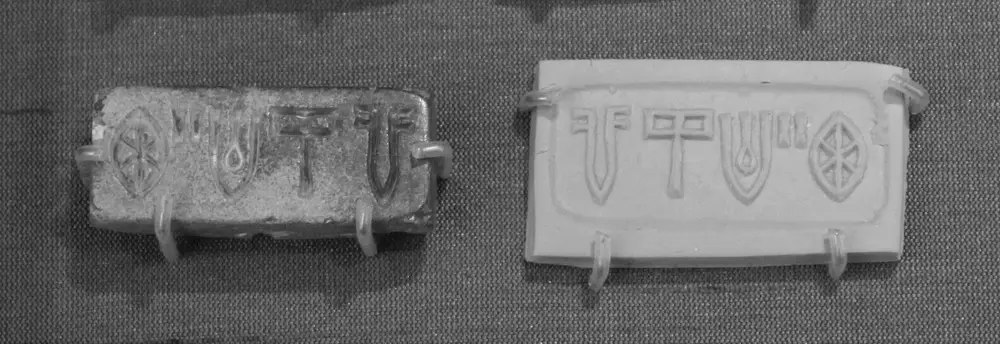
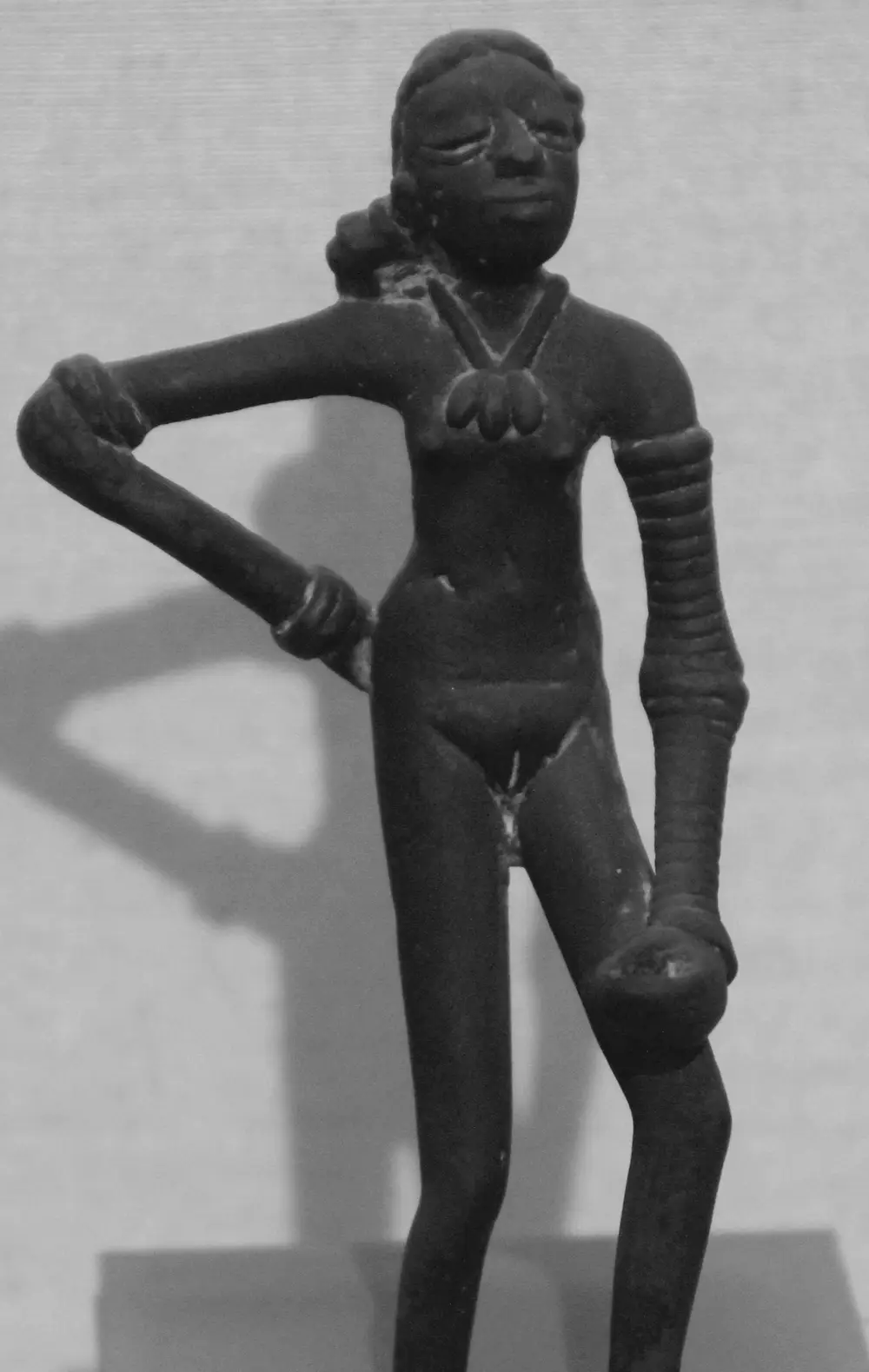
And then there’s the girl. She’s bronze, no taller than your hand, cast around 2500 BCE by the lost-wax method: melt out the wax, pour in the metal. One arm is loaded with bangles to the shoulder. The other hand sits on her hip. Her chin is up. She looks completely at ease. The city she came from left hundreds of seals, covered in signs we have never learned to readIndus steatite stamp seal & its impression · British Museum. So we know how she stood. We can’t read a word she said.

The Dancing Girl of Mohenjo-daro, a small bronze figurine, c. 2500 BCE
The Dancing Girl. Nobody knows if she was really dancing · bronze · National Museum, New Delhi

Act III · The Golden Thread

What Sindh made, the world wanted.

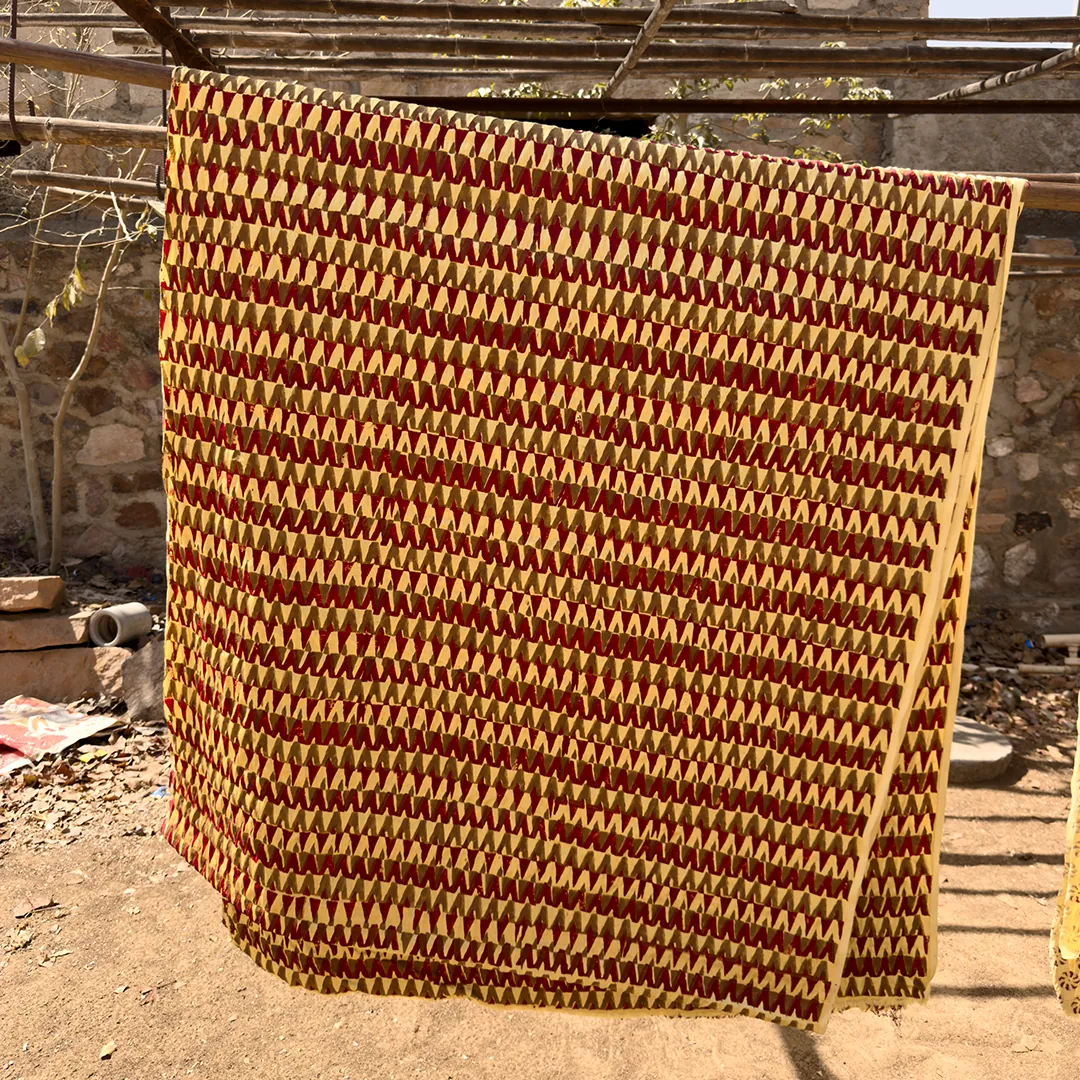
Hand-printed Ajrakh cloth drying in the sun between stages 01 · becomes our textiles & womenswear

Ajrakh

Indigo and madder, resist and river-wash, over weeks. The name is often traced to azraq, Arabic for blue; at Mohenjo-daro the carved “Priest-King” wears a trefoil cloak ajrakh printers still call kakkar, the cloud. An echo, not a receipt.

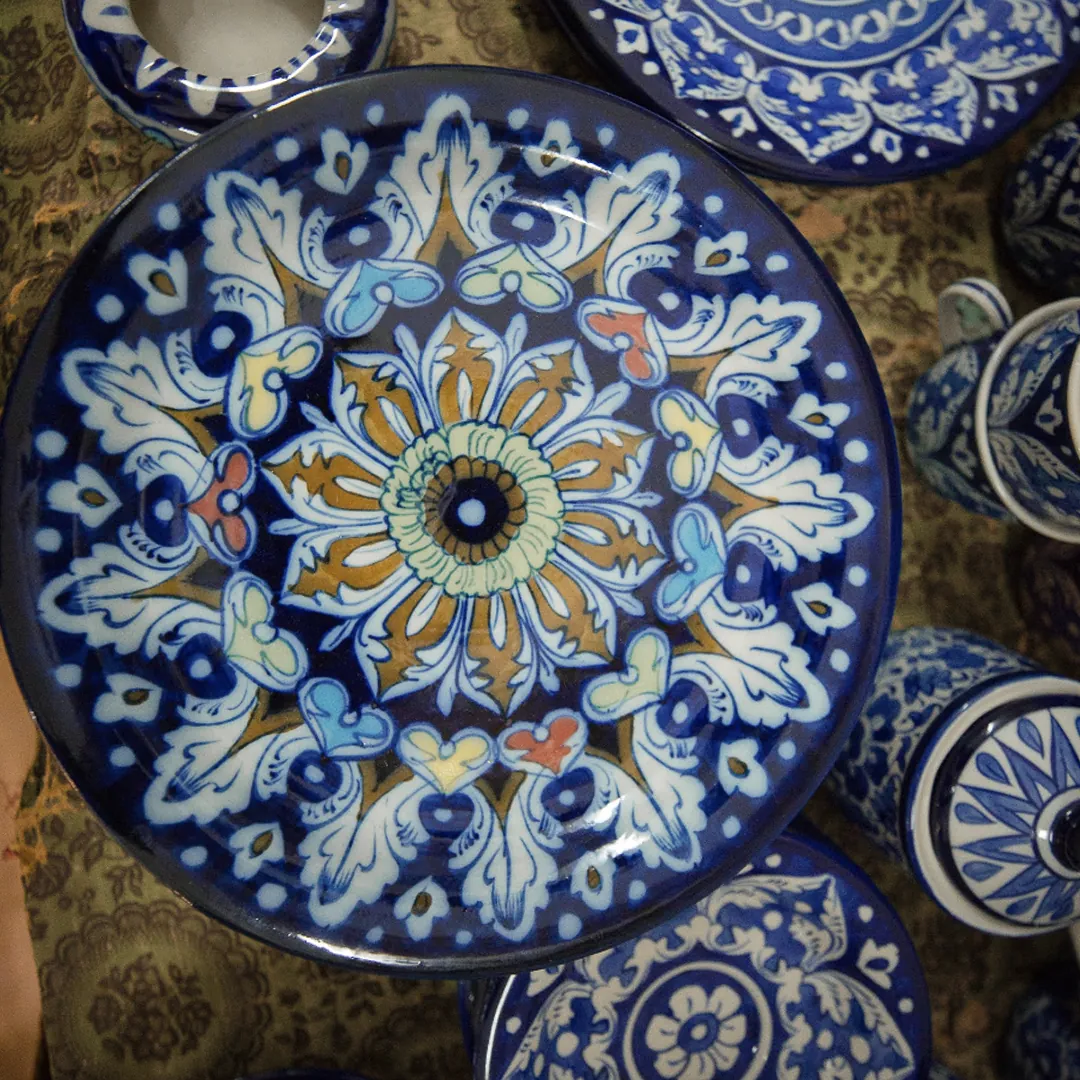
Blue-and-white Kashi-glazed ceramic, hand-painted 02 · becomes our ceramics

Kashi

Cobalt and turquoise laid over white clay and fired glass-bright: the glazed pots and tilework of Hala and Nasarpur. The same blue our own ceramics carry to a table.

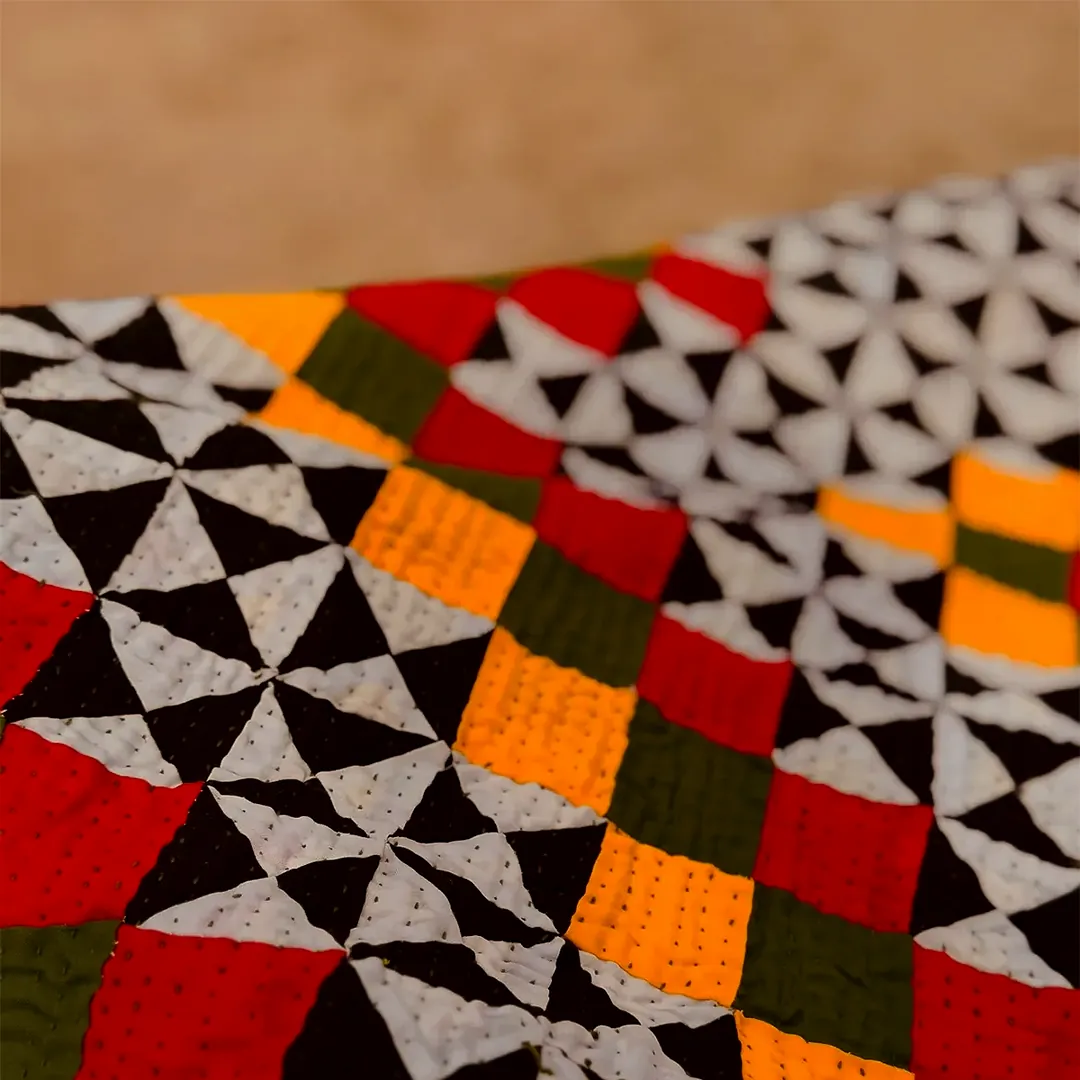
A hand-pieced Sindhi rilli quilt 03 · becomes our Rillis

Rilli

Quilts built from saved cloth: patchwork, appliqué (katab) and embroidery, every scrap with a history. In a Sindhi home a rilli is not décor; it is a family ledger in fabric, passed mother to daughter. We found five.

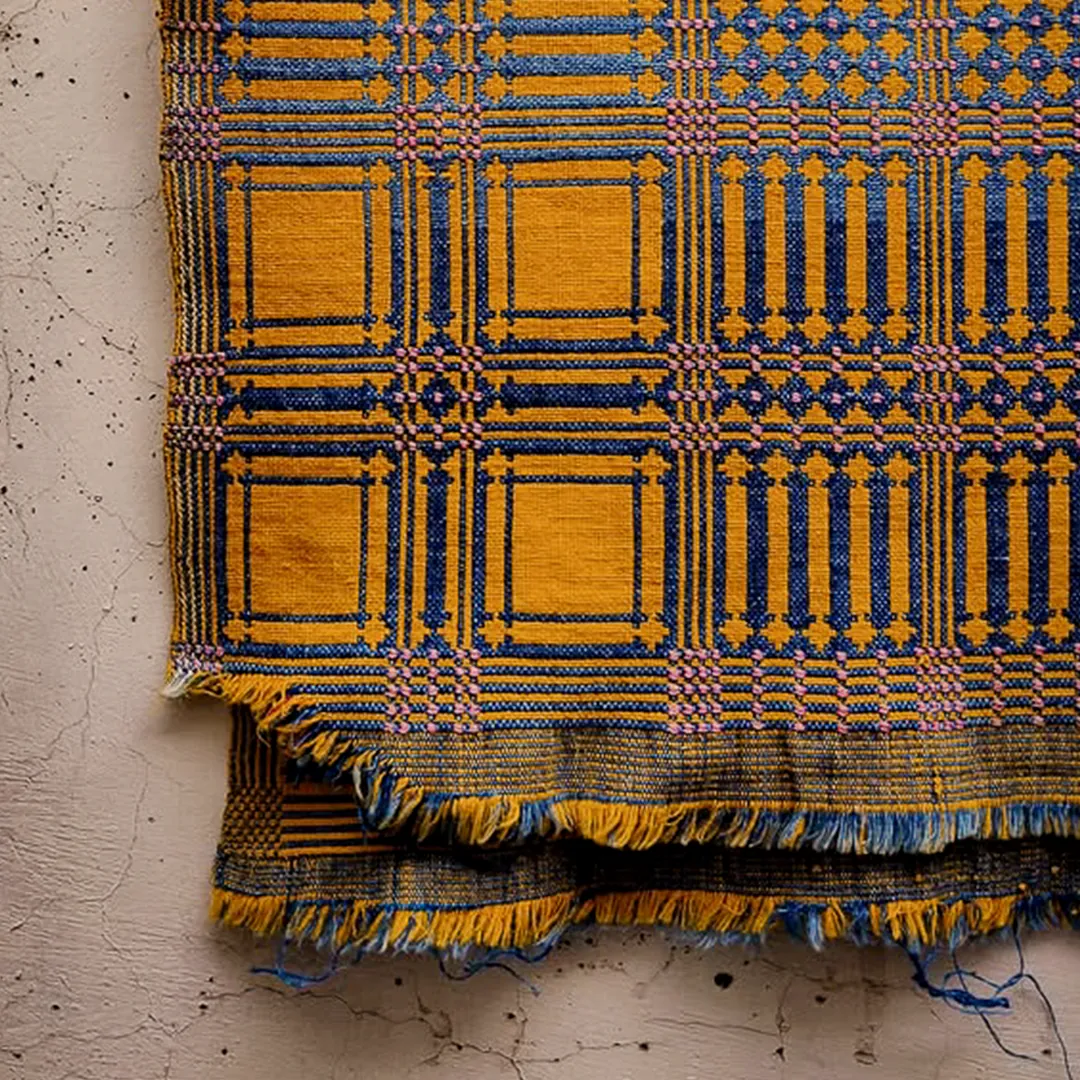
A handwoven khes, indigo and gold, fringed at the edge 04 · becomes our home textiles

Susi & Khes

Cloth woven by hand in narrow stripes and checks, sometimes shot with gold zari, on looms from Hala to Thatta. Mashru, the cotton-and-silk weave, still travels from the loom to the block-printer's table, exactly the road our own cloth takes.

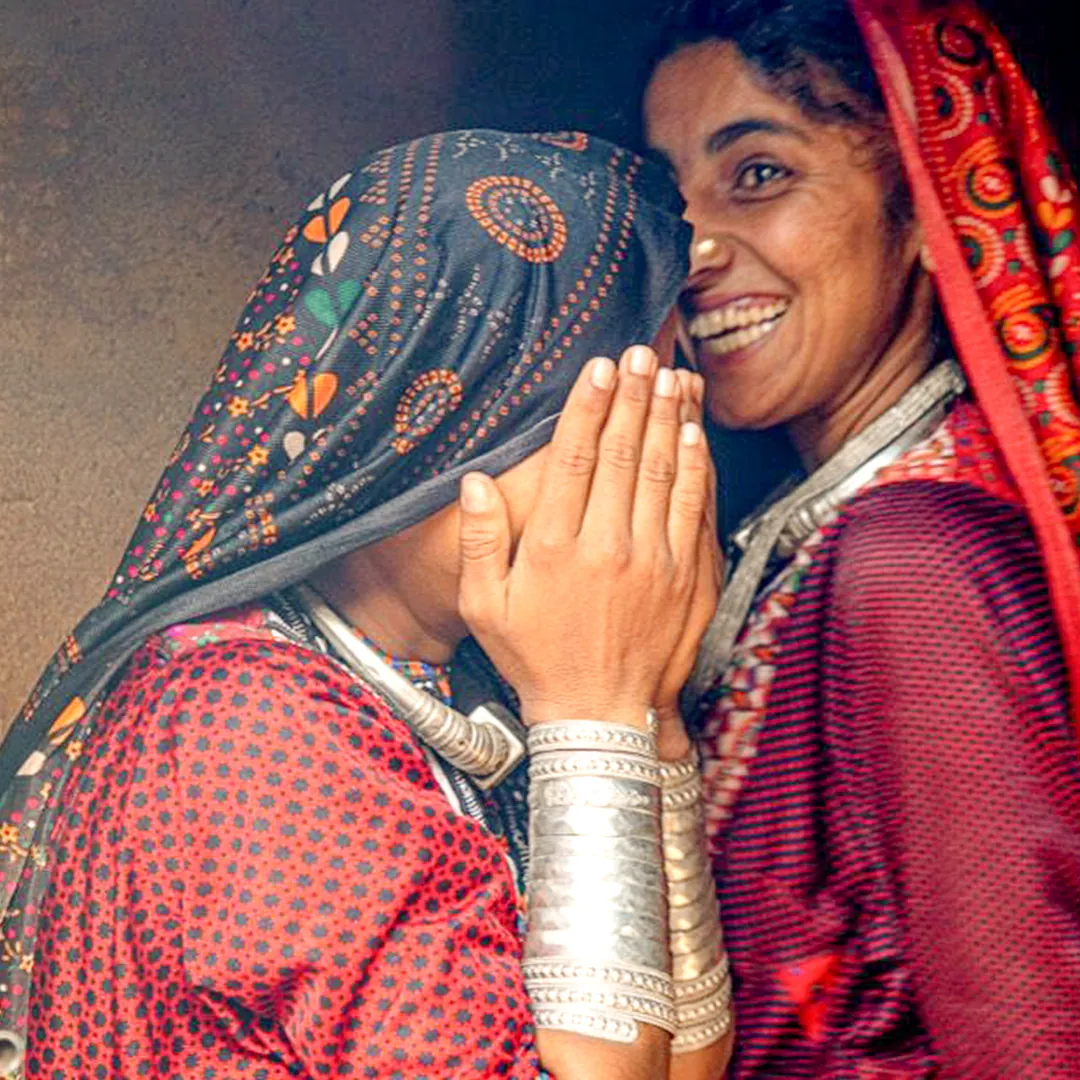
Two women in bandhani, silver at the wrist 05 · becomes our womenswear

Bandhani

Cloth pinched into thousands of tiny points and tied off before it ever meets the dye, each knot a dot the colour cannot reach. The tying is done by hand, by fingernail, and the pattern only shows itself when the cloth is finally opened.

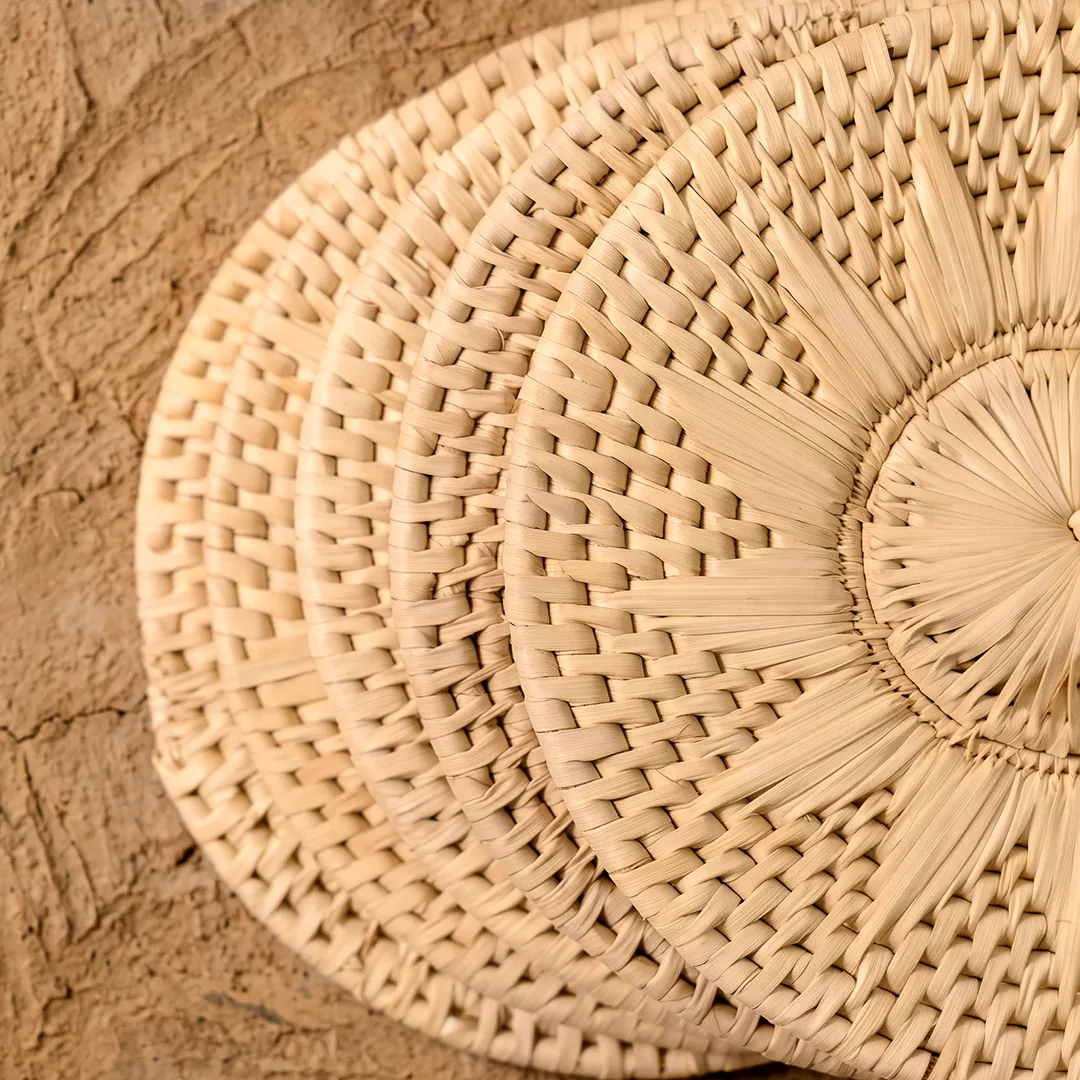
Round chabbi mats woven from split date-palm leaf 06 · becomes our table

Chabbi

Date-palm leaf, split, soaked and coiled by hand into mats and covers. In a Sindhi home the chabbi kept bread warm and covered it in the same motion. Woven flat, ours goes under a plate.

The Full Loom

One province. Crafts beyond counting.

Traditions of Sindh itself, carried far from where they were born. A sample of the loom:

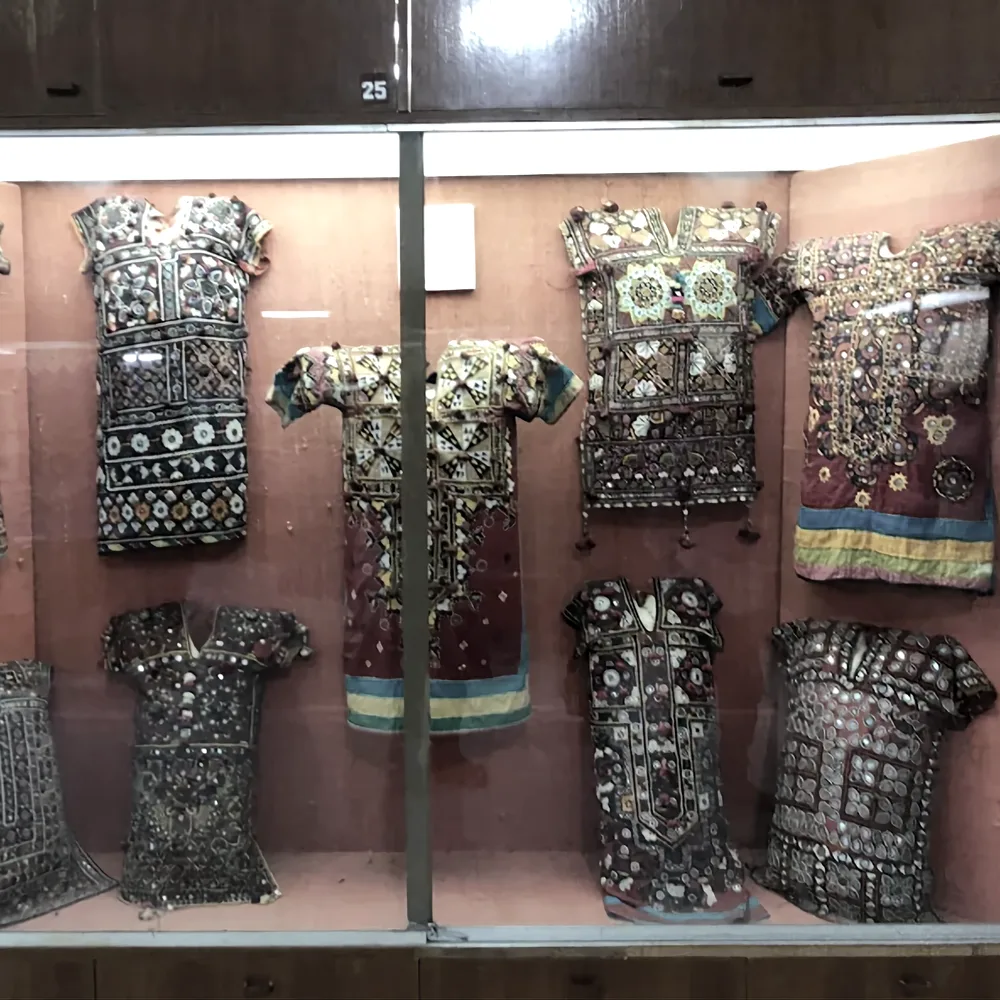
Sindhi women's Gaj tunics, mirror-worked and embroidered

Gaj & SishaEmbroidery & mirror-work

Mirrored, beaded yokes stitched dense enough to stand on their own.

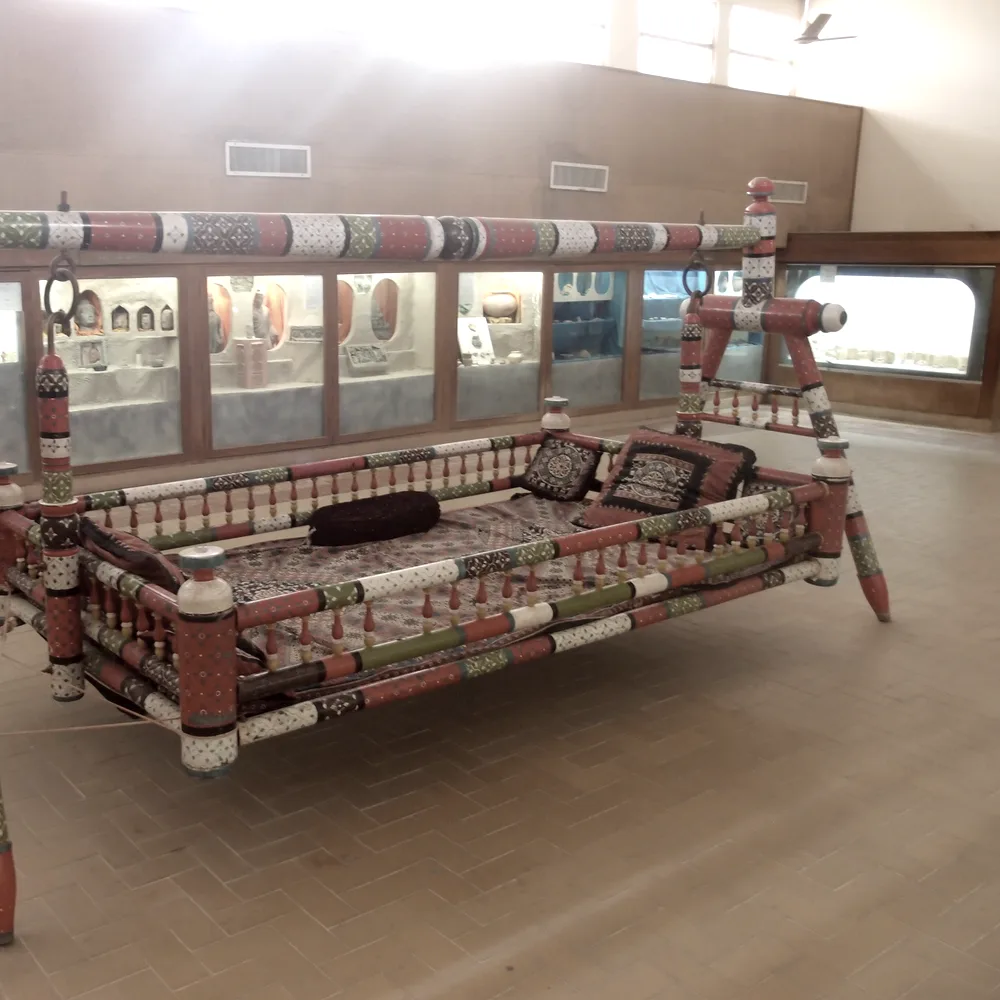
A lacquered Sindhi wooden swing in the Sindh Museum

JandiLacquer-work

Wood turned on a lathe and sealed in bright bands of lacquer: cradles, legs, ladles, swings.

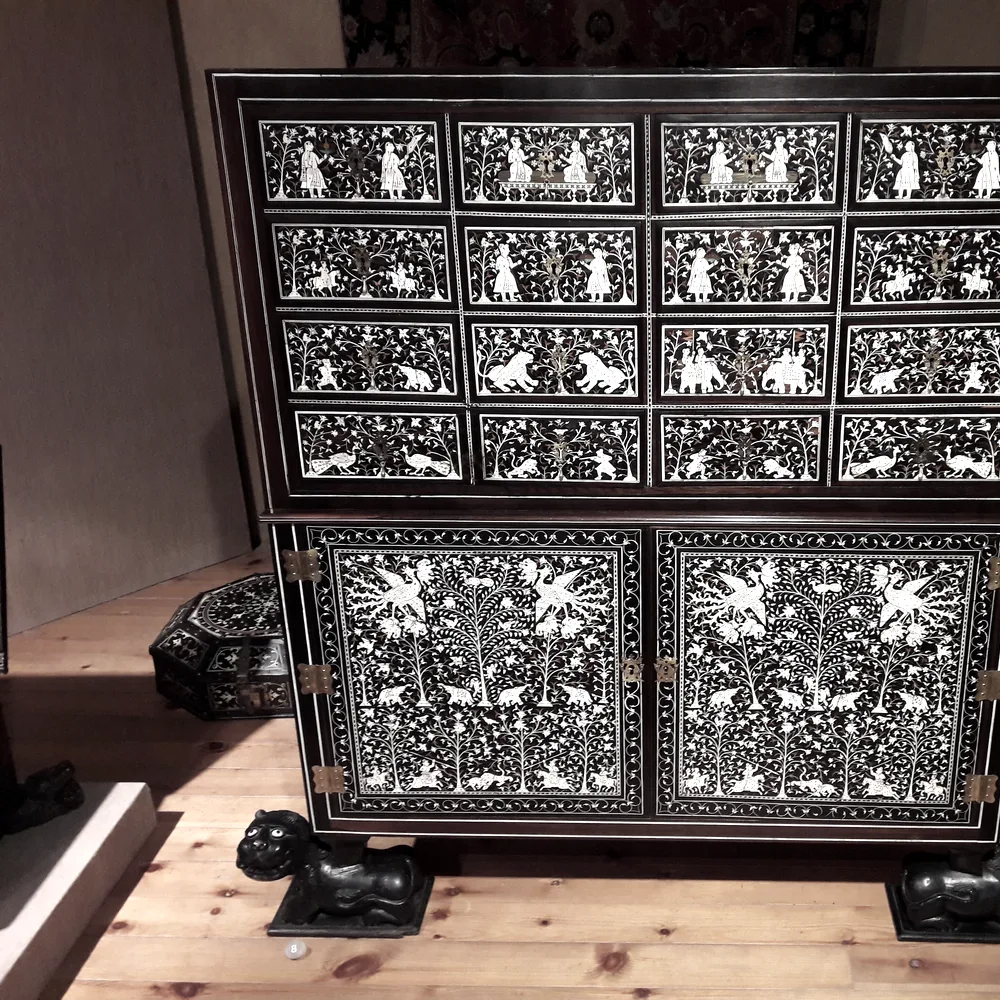
A carved and inlaid ebony 'Sindh work' cabinet

ShikarpurWoodwork & inlay

Doors, chests and screens deep-carved and inlaid: the celebrated “Sindh work” of the province's cabinetmakers.

Act IV · The Rupture

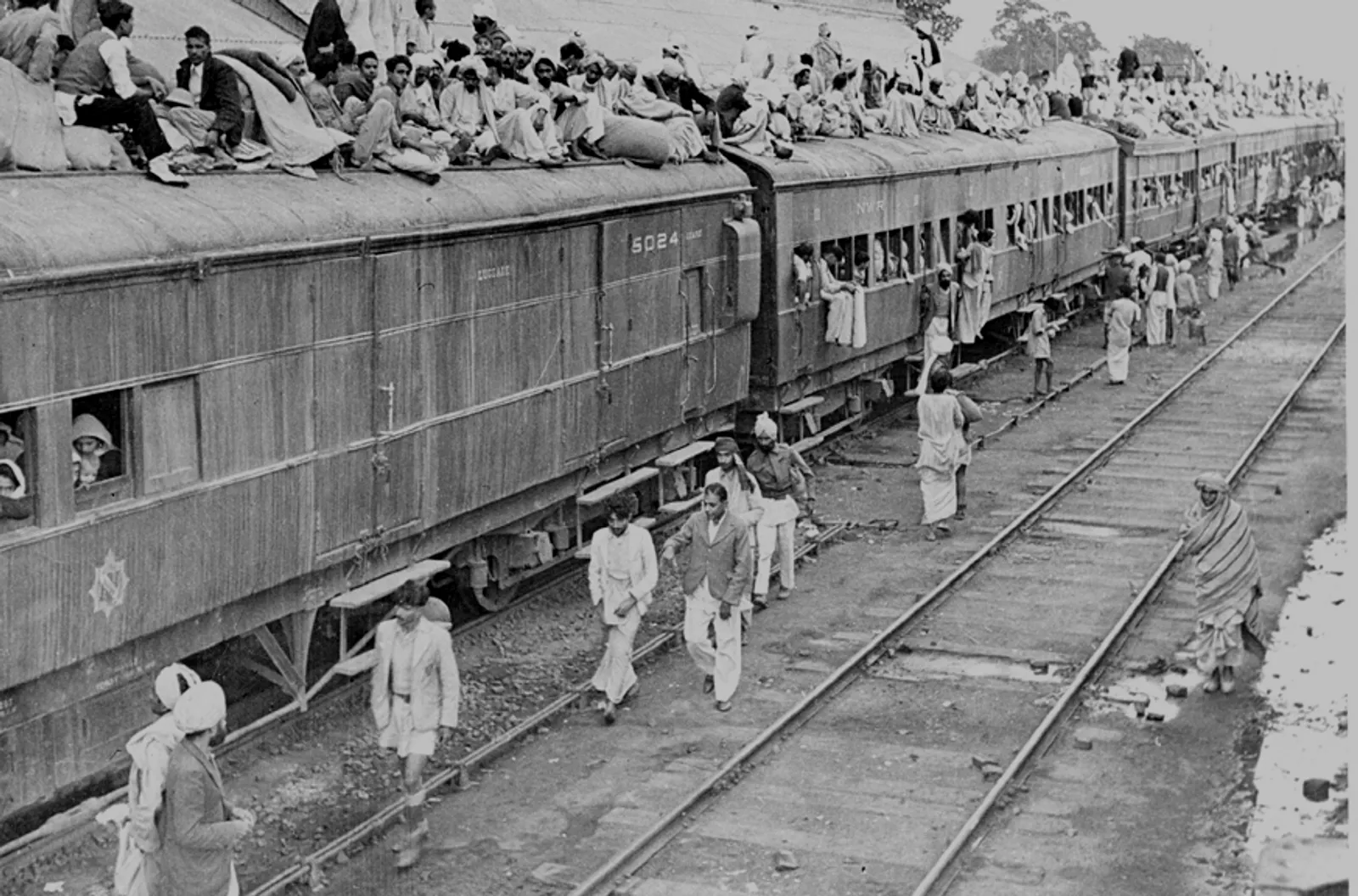
They did not leave in a day.

Punjab was split. Bengal was split. Sindh, given whole to the far side of a new line.

Not all at once. A few families, then more, then a tide, heaviest after the Karachi riots of January 1948.

From every town. By steamer to Bombay and Kutch, some by rail through Rajasthan. And no Sindh to arrive into.

They were not starting from nothing.
They were starting from everywhere.

The subcontinent on the move, 1947. Sindh's own exodus went by steamer and by rail · Photo Division, Govt of India · Public domain

Act V · The Rebuilding

They lost the centre. The edges already held.

Migration, by land and by sea.

Sindhi trading houses had already made connections in different parts of the world, which is where they landed when they were asked to migrate, with the weight of their faith on their shoulders.

Sindhis, everywhere

No map of their own,and a mark on everyone else's.

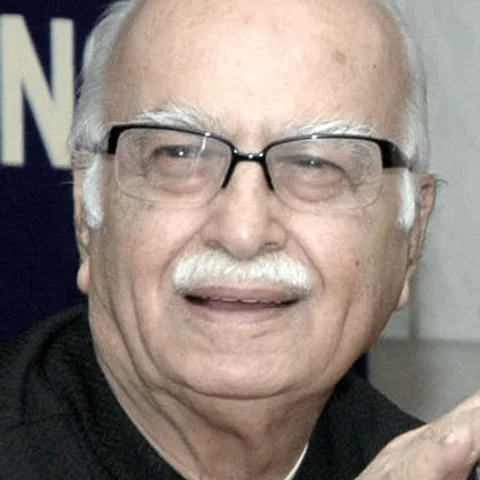
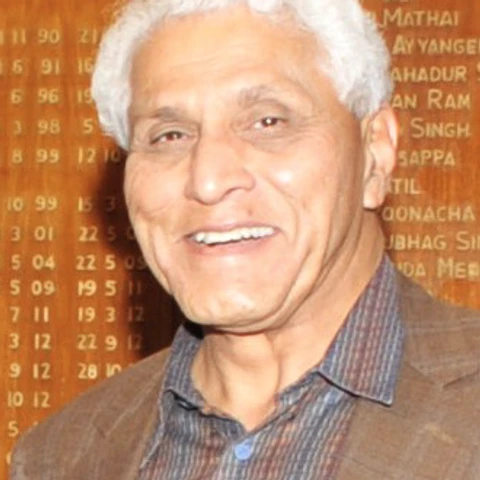
L.K. Advani
L.K. AdvaniStatesman, former Deputy PM. Born in Karachi.
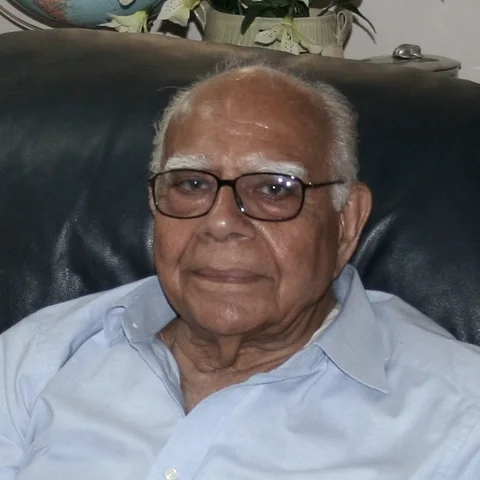
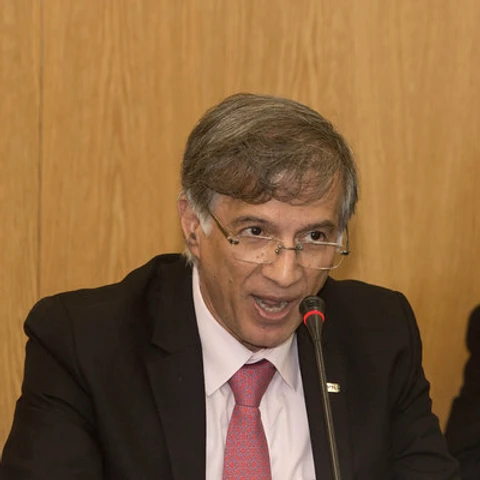
Ram Jethmalani
Ram JethmalaniSupreme Court advocate and former Law Minister. Born in Shikarpur.
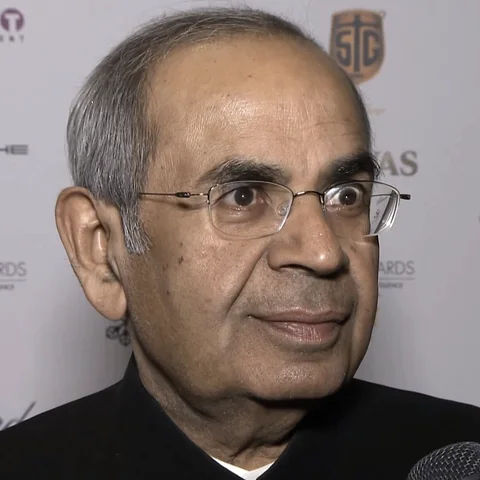
Gopichand Hinduja
Gopichand HindujaThe Hinduja brothers, a global industrial house.
Romesh Wadhwani
Romesh WadhwaniTech founder turned philanthropist. Funds skills training across India.
Niranjan Hiranandani
Niranjan HiranandaniReal-estate pioneer. Built Mumbai's Hiranandani townships.
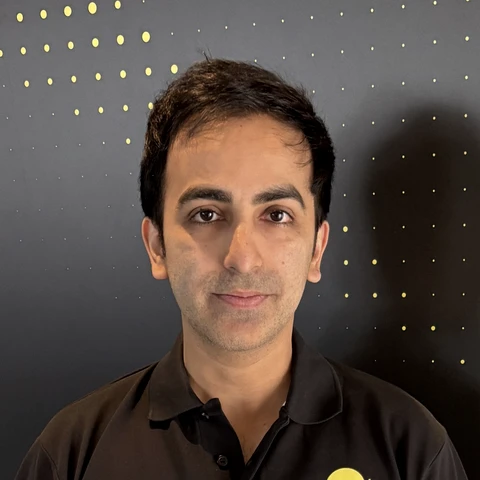
Pankaj Advani
Pankaj Advani28-time world champion, billiards and snooker.
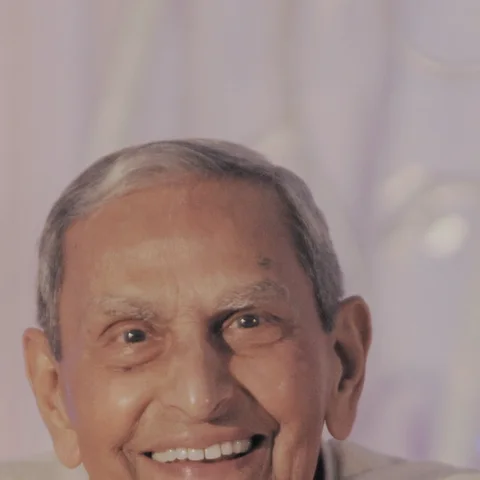
Dada J.P. Vaswani
Dada J.P. VaswaniSpiritual teacher. Born in Hyderabad, Sindh.

…and Rajkumar Hirani · Sadhana · Dr Indira Hinduja · Umesh Vazirani. The roll runs long.

Act VI · Akhar

The land was lost.The word was carried.

Crossing into India, Sindhis carried their language in a new hand: Devanagari, all but the same script as Hindi.

Punjab · Sindhu · Gujarat · Maratha…

“Thy name rouses the hearts of Punjab, Sindh, Gujarat and Maratha…”

In 1967 Sindhi was written into the Constitution, the one Indian language with no home state of its own. And every morning, a billion voices still sing Sindhu: the word this story opened with.

The Sindhi alphabet

An alphabet carried whole, and four letters all its own.

If you read Hindi, you can read most of this already. The four glowing letters are Sindh's own: soft, swallowed sounds Hindi never needed a sign for, so Sindh drew them.

Act VII · The Homecoming

A glimpse into Sindh, its history, its craft, its colour, gathered into things you can live with.

Our whole aim, in one line

To keep Sindh alive, in our hearts, our minds, and our homes.

A first look

Everything you just read, made into things you can live with.

A hand-pieced Sindhi rilli patchwork quilt
One of a kindA Rilli quiltFounder's Finds · never re-made
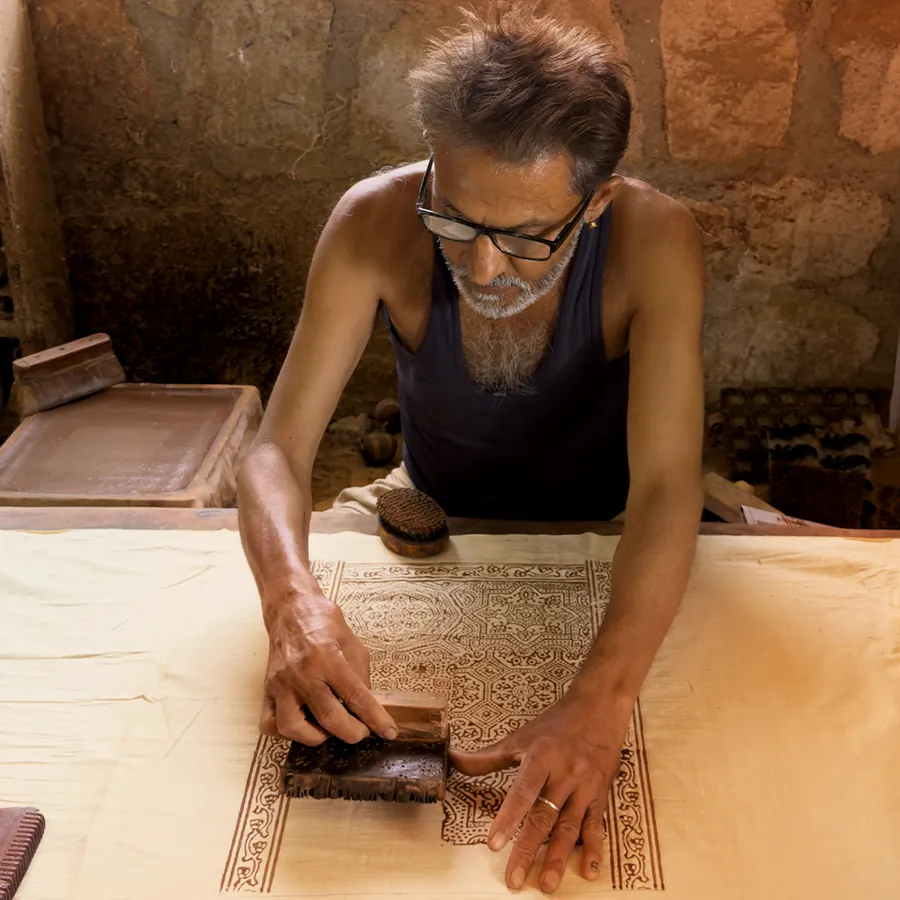
A Khatri printer pressing a carved wooden block into cloth by hand
Hand-block printed with loveAjrakh · Rajasthan
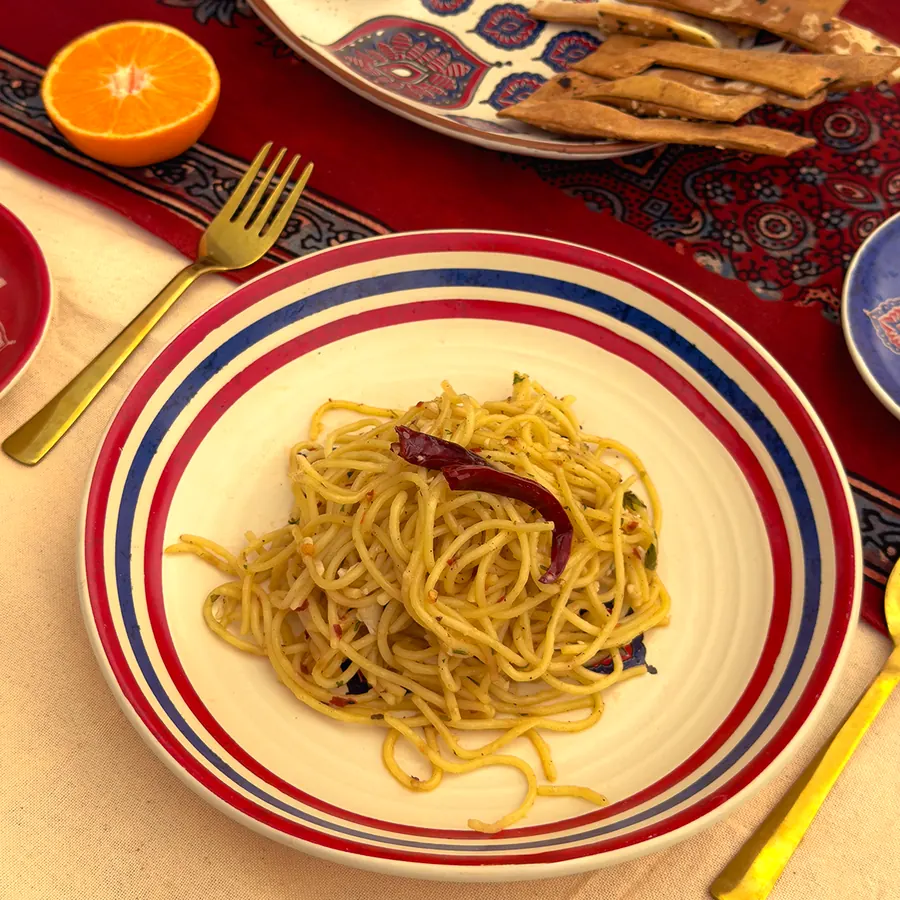
A meal served on a striped plate over an Ajrakh table runner
For you to relishStoneware · Uttar Pradesh
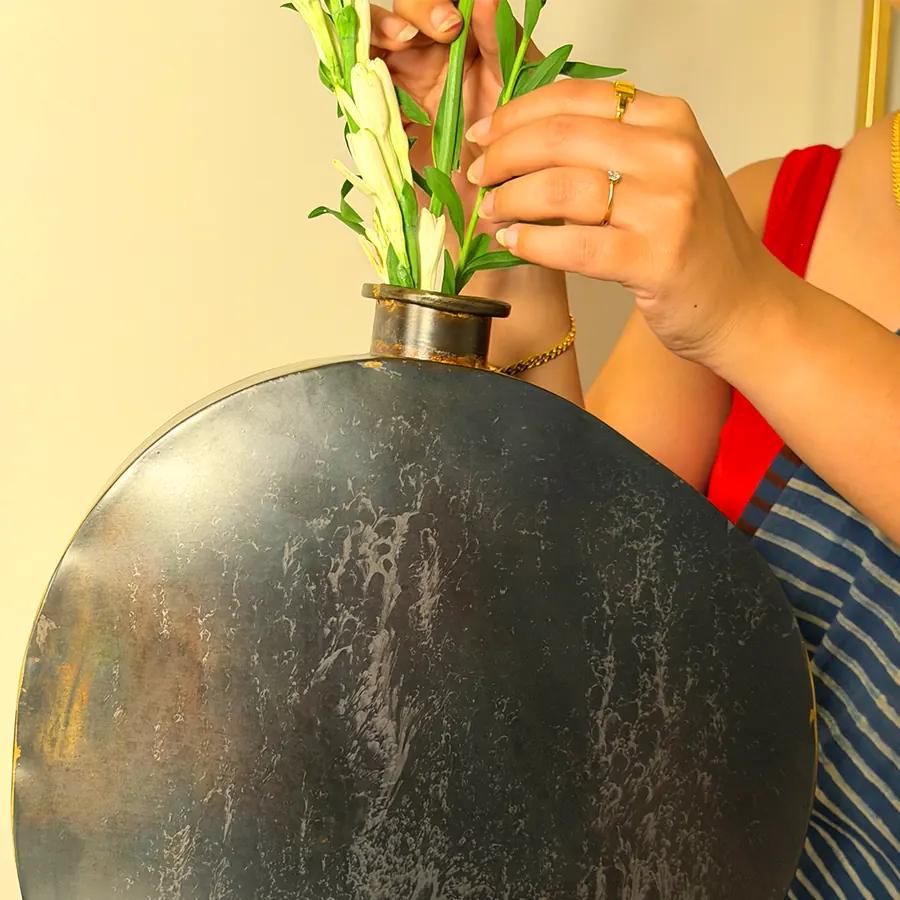
Tuberose stems being placed into a large round dark iron vase
Chaand's ShadowIron · Uttar Pradesh
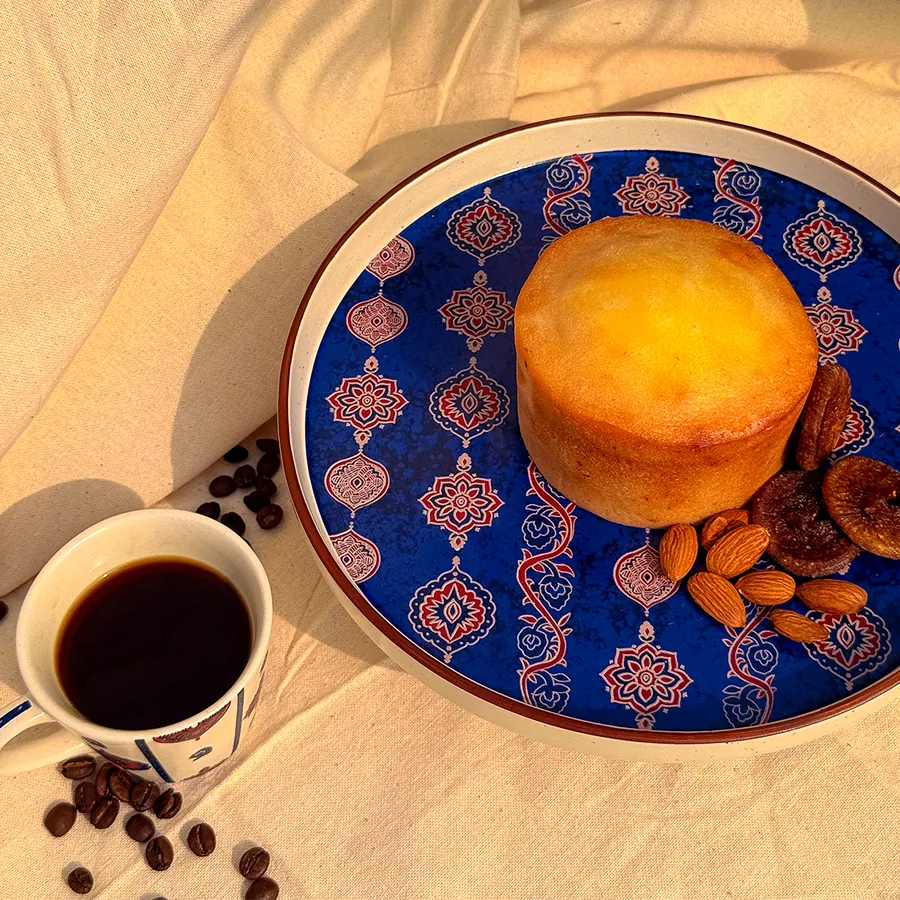
Cake and coffee on a patterned plate
For dessertsStoneware · Uttar Pradesh
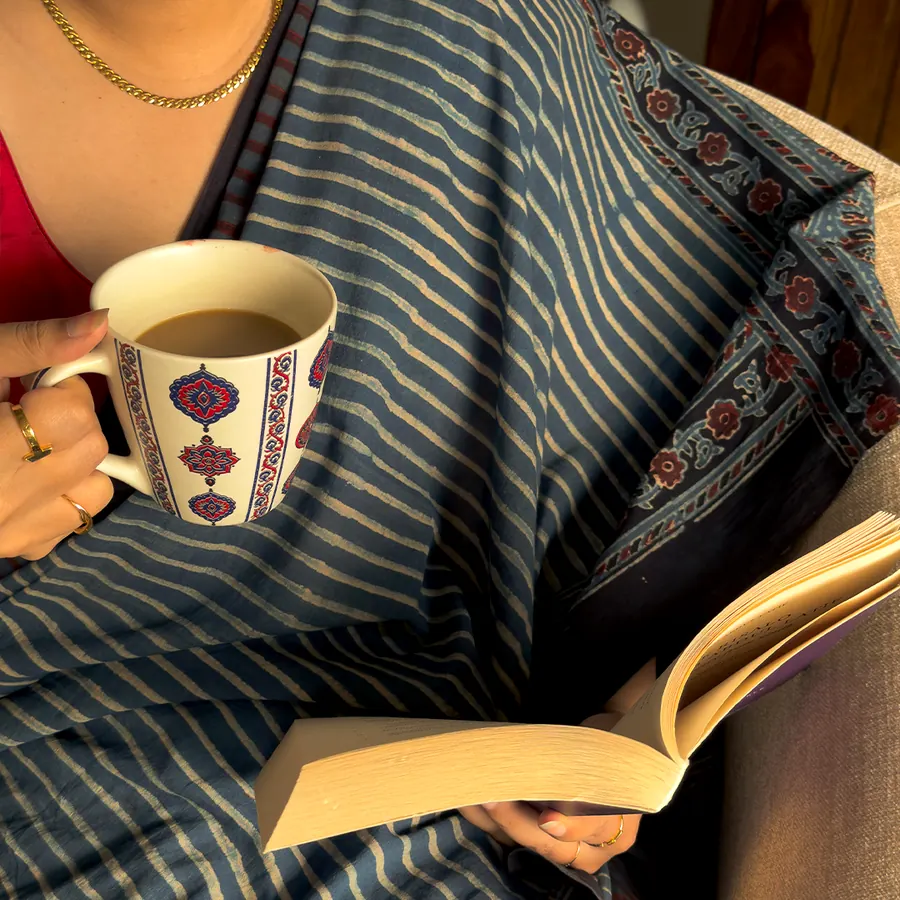
Reading with a mug, wrapped in an indigo Ajrakh shawl
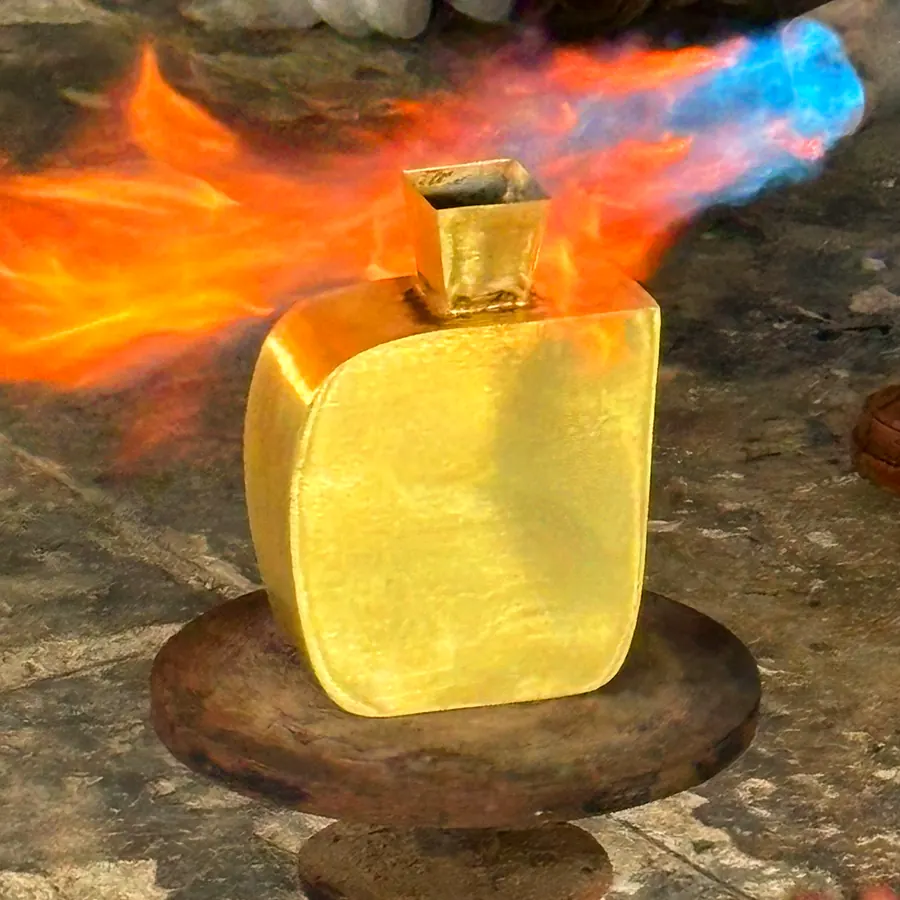
An iron vessel standing in the flame of a torch at the workshop
Ancient crafts, reimaginedIron · Uttar Pradesh
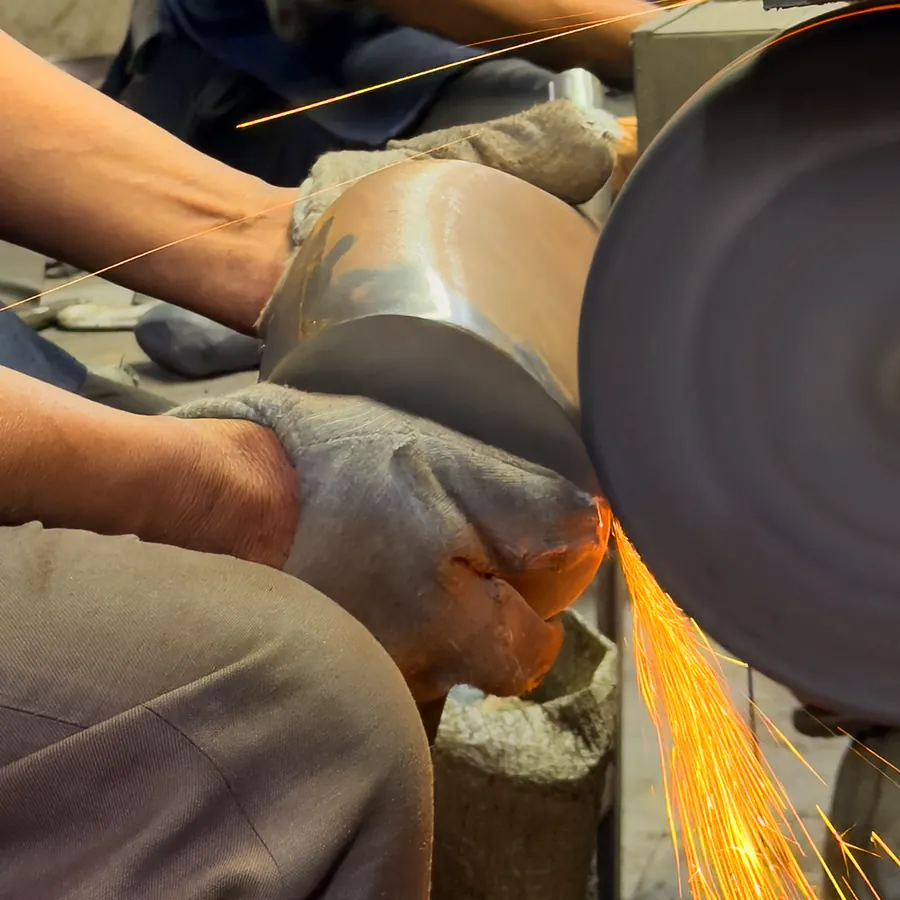
Two pairs of hands holding a curved iron piece to a grinding wheel, sparks flying
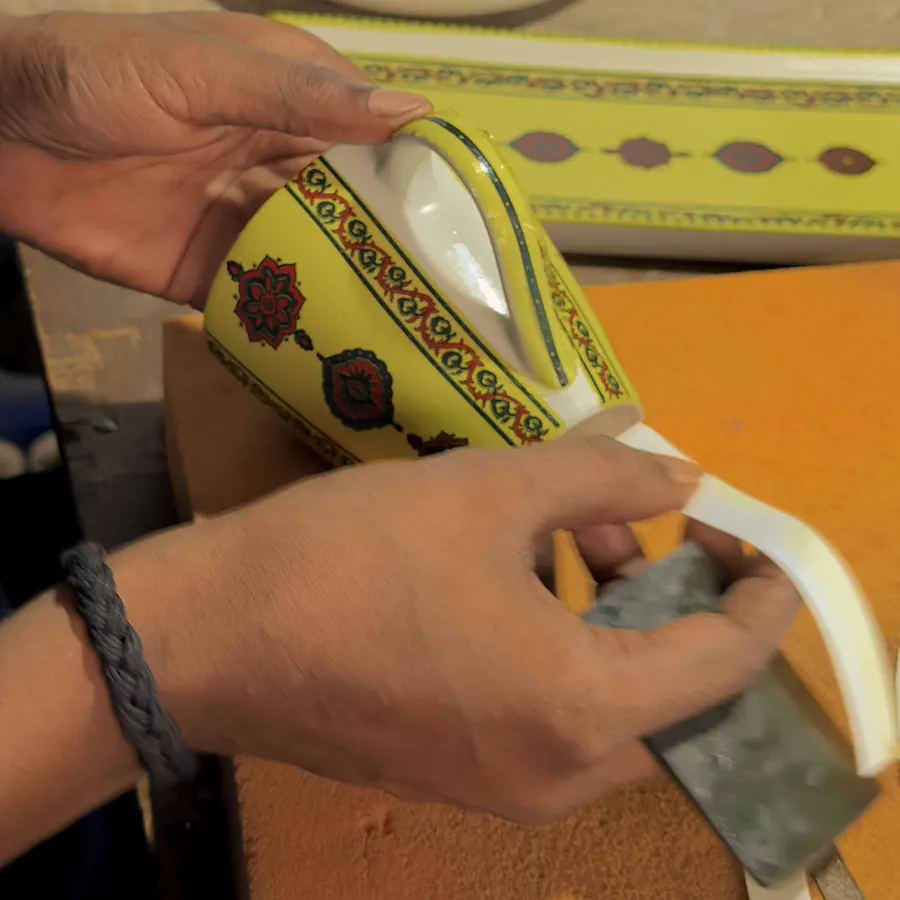
A printed decal being smoothed onto a glazed mug by hand
Hand-finishedStoneware · Uttar Pradesh
An iron piece marked with The Koki Club logo, held to a polishing wheel

Act VIII · The Invitation

Three questions, if you have a moment. They tell us what to make more of.

Is Sindh in your family?

Pick one · 1 of 3

What would you want first?

2 of 3

Who is it for?

Last one

Then that is where we start.

₹500

off your first order

  • We write to you first, on the morning we open.
  • We tell you about each drop before we announce it.
  • You see the five Rilli quilts before anyone else.

On orders over ₹3,000, launch week only. The code reaches you on the morning we open.